
More and more eco-friendly products are appearing on the market, while governments are limiting plastic consumption and segregating waste. All these measures are being taken to help nature.
Being "ECO" is no longer just a trend, but a conscious choice. Among the many ecological changes, the use of renewable energy sources (RES) - sources based on renewable and inexhaustible raw materials - deserves special attention.
What does the use of RES look like in Poland and around the world? What is worth knowing about them, and can you, as an individual, be more environmentally friendly thanks to them?
How climate change affects your daily life
When it comes to ecology, the modern world, especially the scientific community and activists, focuses on two fundamental problems: global warming and excessive waste. Most people believe that if something is not visible, then it does not exist. A warmer climate causes glaciers to melt and sea levels to rise, and the oceans are polluted with mountains of garbage that contaminate the water, contributing to the death of many animals. Both global warming and increased pollution are the fault of humans. There is no denying that each of us is indirectly responsible for the increase in CO2 emissions into the atmosphere. However, it is difficult to imagine the changes, and their effects directly affect us. Dry patches of earth where there used to be green lawns in front of apartment buildings, snowless winters, violent heat waves in summer, and smog spreading across Polish cities—these are just the tip of the iceberg.
Non-renewable energy sources and their impact on the environment
The increase in energy demand is so great that traditional energy sources are rapidly becoming insufficient. The economies of developed countries are currently based on fossil fuels. However, deposits are being depleted. More and more countries are forced to import them from the farthest corners of the globe, including the Arctic. Generating energy from non-renewable sources is becoming more expensive and less profitable every year. It is impossible not to mention the political problems. The uneven distribution of fossil fuel deposits around the world generates competition between militarized countries, leading to armed conflicts.
The use of fossil fuels also has an impact on society. Both coal and oil extraction pose enormous risks. Accidents in mines and on drilling platforms occur almost daily. Oil spills from tankers pollute the seas and oceans. Increased exploitation of non-renewable energy sources is causing sea levels to rise. The populations of many villages and towns have been forced to leave their homes because they have been swept away by waves.
Scientists estimate that in 30 years, Amsterdam and Venice will be underwater. Rising temperatures and rapid global warming contribute to the faster spread of infectious diseases.
Inhaling the products of coal combustion, dust and heavy metals, such as lead, leads to inflammatory processes in the body and, over time, to the development of cancer. In children, there has been an increase in cases of asthma and bronchitis. Non-renewable energy sources have a significant impact on the economy. A telling example of this is the decline in the profitability of mines. A negative economic balance almost always leads to job losses.
Renewable energy sources in the fight against climate change
The negative impact of fossil fuels not only on the environment but also on society and the economy has been recognized internationally for some time. Taking the European Union as an example, member states have committed to reducing the extraction and use of fuels that produce emissions and have made investments aimed at utilizing renewable energy sources.
Greater importance is also being attached to waste sorting, the expansion of green areas, and water retention.
Among renewable energy sources, solar and wind energy occupy the top spot, accounting for almost 90% of the share of renewable energy in energy production. Poland is increasing its investments in this area year on year. But what is renewable energy? Renewable energy sources are based on ecological, completely natural and most importantly, inexhaustible resources. Compared to coal or oil, they are environmentally friendly.
1. Solar energy
Used to generate electricity (solar collectors) or heat (photovoltaic systems), it has become particularly popular in Poland over the last five years. This is due to subsidies for both businesses and households, designed to encourage investment in renewable energy sources. Solar collectors absorb solar energy in the form of heat and transfer it to the installation, where it can then be used. Photovoltaics, on the other hand, involve the installation of special cells (usually made of silicon) that capture solar radiation and convert it into direct current. It is estimated that covering 0.3% of the Earth's surface (the area of Sweden) with photovoltaic panels would meet the energy needs of the entire world population.
2. Wind energy
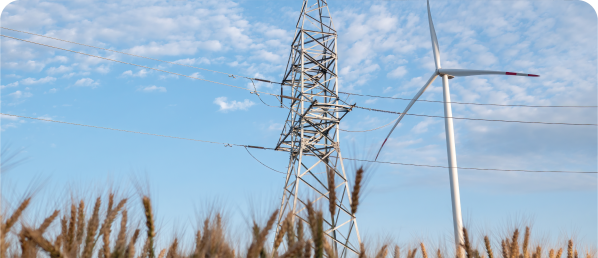
Currently, the most popular form of renewable energy in Poland Wind energy is harnessed using special turbines that convert the kinetic energy of the wind into electricity. When traveling by train or car on Polish roads, it is impossible not to notice the vast expanses of greenery dotted with rows of wind turbines - these are wind farms. A single wind turbine consists of a tower, a mobile nacelle, and a rotor. The rotation of the large blades generates energy.
3. Hydroelectric energy
Water has enormous potential for energy production. It is not difficult to guess that hydroelectric energy involves the use of flowing water. A carefully designed system of dams, turbines, and, of course, watercourses is responsible for converting the kinetic energy generated by the movement of water into electricity. When we talk about hydroelectric power, we also refer to tidal energy - a solution that involves the use of regular changes in the water level of seas or oceans. Unfortunately, the construction of a tidal power plant is particularly expensive, which is why this initiative is not very popular.
4. Biomass energy
Biomass is nothing more than plant and animal matter that undergoes degradation. Depending on the type of material, biomass can be classified as solid (wood or plants), liquid (biofuels), or gaseous (biogas). The production of energy from biomass boils down to photosynthesis and conversion into usable energy through combustion.
5. Geothermal energy
The energy inside the Earth is based on the heat of water and rocks located deep below the surface. It is one of the most difficult natural energy sources to obtain. Deep drilling is required to extract the resources - hot water or steam. This is then sent to a geothermal power plant, where it is converted into usable energy - heat or, increasingly, electricity.
The advantages of renewable energy sources are undeniable.
As inexhaustible resources, renewable energy sources guarantee complete energy security. Additional investments generate more jobs - the exact opposite of the mining activities mentioned above. Obtaining energy from so many environmentally friendly sources is safe - not only for the environment, but also for people. Energy independence has an impact on the state budget and reduces the risk of disputes between neighbouring countries.
There is no denying that obtaining energy from renewable sources is not as expensive as from non-renewable sources - fossil fuels and oil.