
Electricity prices in Europe have become increasingly volatile over the past years. For many businesses, this volatility has turned energy into a major financial risk. Companies are therefore looking for strategies that allow them to stabilise electricity costs and reduce exposure to market fluctuations. In this article we explain how businesses can manage energy procurement in times of market uncertainty.
Why Energy Price Volatility Matters for Businesses
Electricity prices are influenced by many factors, including:
- weather conditions affecting renewable generation
- fuel prices such as natural gas
- geopolitical developments
- demand fluctuations across Europe
Because of these factors, electricity prices may change significantly within short periods of time.
For companies with high energy consumption, this volatility can directly affect profitability.
Strategies for Stabilising Energy Costs
Companies can use different procurement models to reduce the impact of energy market volatility on their operating costs. A well-designed energy strategy not only helps minimise the risk of sudden price increases, but also improves budget predictability and overall financial stability. Below we present three commonly used approaches that help businesses manage their energy costs more effectively.
Fixed Price Contracts
One of the simplest ways to limit price risk is through fixed price energy contracts. In this model, the price per MWh remains unchanged for the entire duration of the agreement—typically between 12 and 24 months.
For many companies, this means greater predictability of operational costs and easier budget planning. When electricity prices increase on the market, a fixed price contract allows businesses to avoid immediate cost increases.
However, it is important to remember that price stability depends on the structure of the contract. Before signing an agreement, companies should carefully review whether it includes clauses that allow price adjustments under certain market conditions.
Long-Term Contracts
Another strategy for stabilising energy costs is the use of long-term contracts, such as Power Purchase Agreements (PPA). These agreements are typically signed for periods ranging from 5 to even 10 years.
Their main advantage is the ability to secure electricity prices over a longer period, which significantly reduces the impact of short-term market fluctuations on a company’s energy costs.
Long-term contracts are particularly attractive for companies planning development over a multi-year horizon and seeking greater stability in their operating costs. In many cases, PPA agreements are also linked to renewable energy generation, which can support environmental goals and broader ESG strategies.
Energy Consumption Data Analysis
One of the most important elements of an effective energy strategy is the analysis of actual energy consumption data, commonly referred to as the Load Profile.
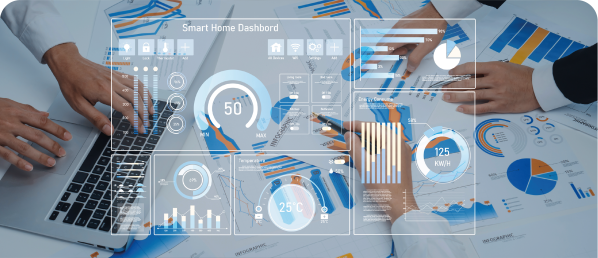
The Load Profile shows when and how much electricity a company consumes throughout the day. With this information, it becomes possible to design energy contracts that are much better aligned with the company’s real operational needs.
Without analysing consumption data, energy offers are often based on standardised or average consumption profiles. In such cases, suppliers may include additional risk margins in their pricing.
Using Load Profile data therefore not only improves the accuracy of energy consumption forecasts, but can also reduce the overall cost of electricity for the company.
Energy as a Financial Risk Management Tool
For many organisations, energy procurement is no longer treated simply as an operational purchase, but as an important element of financial risk management. In sectors where electricity represents a significant share of operating costs, fluctuations in energy prices can directly affect profitability, cash flow stability and long-term financial planning.
Companies that actively manage their energy strategy are better positioned to protect their margins and maintain stable cost structures. By analysing market conditions, consumption patterns and available contract models, businesses can reduce their exposure to sudden price increases and avoid unexpected cost spikes.
A structured energy procurement strategy may include a combination of different approaches, such as fixed-price contracts, long-term agreements or market-indexed models. When these solutions are aligned with the company’s operational needs and financial objectives, energy becomes not only a controllable cost but also a factor supporting greater financial predictability and resilience.
In this context, many organisations increasingly treat energy purchasing decisions in a similar way to other financial instruments used to hedge risk. A well-designed energy strategy allows companies to focus on their core business while maintaining greater control over one of their most important operational expenses.
Support from Respect Energy Romania
The Respect Energy Romania team supports companies in analysing energy consumption data and identifying contract models that help stabilise electricity costs.
Through a data-driven approach, businesses can reduce exposure to market volatility and improve budget predictability.